
Chinese medicine · Knowledge & care
Gua Sha: Tradition, Touch and Modern Evidence
By jan · Updated
Gua Sha: Tradition, Touch and Modern Evidence
1. A small tool with a long story
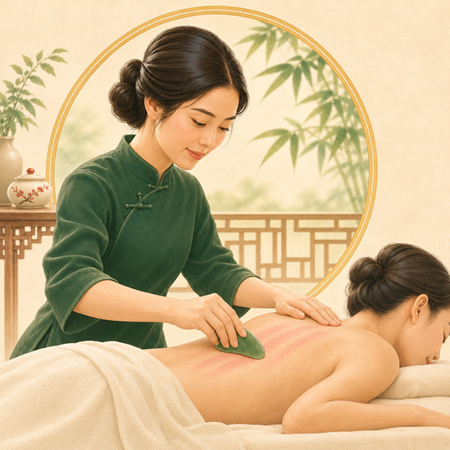
Imagine a quiet room, a folded linen cloth and a smooth instrument resting in a practitioner's hand. The scene is simple, yet it belongs to a rich tradition of care. Gua sha, written 刮痧 in Chinese, uses repeated press-stroking movements across lubricated skin. It is associated with Chinese medicine and a wider family of East Asian practices sometimes called coining or spooning.[1]
Today, gua sha appears in both treatment rooms and beauty routines. Those settings share a familiar tool, but their purpose and intensity can differ considerably. Understanding that distinction opens a more useful conversation: what does this particular treatment involve, what might it offer, and what does the evidence actually support?
2. Reading the traditional language
Within Traditional Chinese Medicine, gua sha is commonly explained through the movement of qi and blood and the treatment of patterns described as stagnation. This language belongs to a traditional framework for interpreting symptoms and choosing care.[2] Like a landscape described through seasons and flowing water, it offers a distinctive way of organising clinical observations.
These concepts should be identified as traditional explanations. They are not measurements of blocked blood vessels or accumulated toxins. A responsible practitioner can discuss both perspectives clearly, explaining the traditional reasoning while considering medical history, examination findings and the limits of current research. Cultural meaning and scientific scrutiny can sit comfortably at the same table.
3. What happens beneath the tool?
Pressure and friction produce a local response in the skin and underlying tissues. In a small physiological study involving 11 healthy volunteers, researchers measured increased surface microcirculation after gua sha using laser Doppler imaging. The observation helps explain the warmth and redness that may accompany treatment.[3]
However, a short-lived change in local blood flow does not establish improved circulation throughout the body, faster recovery from injury or better organ function. Proposed effects on pain signalling and inflammatory pathways remain areas of investigation. The useful scientific question is not simply whether a biological change occurs, but whether treatment produces a meaningful, lasting improvement for people with a particular condition.
4. Pain relief: promising, but still uncertain
Pain is among the most studied applications. A randomised trial of 48 people with chronic neck pain found greater pain reduction after one week with gua sha than with a local heat pad.[4] A separate trial involving 50 people with chronic low back pain reported less pain than a waiting-list comparison, but no significant between-group difference in functional disability.[5]
A 2025 study, involving researchers from Khon Kaen University, also examined gua sha for chronic low back pain.[6] These small studies support further investigation, rather than a promise of recovery. Limited follow-up and difficulties separating treatment effects from attention and expectations restrict certainty. Gua sha may be considered as an adjunct for selected patients, with outcomes reviewed alongside their broader care.
5. Understanding the marks on the skin
Traditional body gua sha can produce pinpoint red or purple spots called petechiae, sometimes accompanied by larger bruise-like patches. These reflect blood escaping from small vessels beneath the skin after mechanical pressure. They are not impurities being drawn out of the body.[7]
The colour and intensity of a mark do not provide a validated measure of toxin levels, disease severity or treatment success. Marks commonly fade over several days, although individual responses vary.[8] Before treatment, the practitioner should explain this visible effect and obtain consent. More intense marking is not a sensible goal in itself. Comfort, intact skin and an appropriate clinical purpose matter more than creating a dramatic photograph.
6. Facial gua sha is a different conversation
Facial gua sha generally uses much lighter pressure. Bruising is not the aim. Some people enjoy the sensation or notice a temporarily less puffy appearance, but lasting rejuvenation requires stronger evidence.[9]
An eight-week trial published in 2025 compared facial gua sha with facial rolling in 34 women. Both groups showed changes in facial contour measurements; muscle tone changes favoured gua sha, while elasticity changes favoured the roller. There was no untreated comparison group, and the study did not establish permanent lifting or wrinkle removal.[10]
For readers, the distinction is practical: an enjoyable massage ritual is one thing, a proven anti-ageing treatment is another. Jade and other attractive materials may enrich the experience, but a beautiful tool should not be mistaken for evidence of medical benefit.
7. A moment of calm, without detox promises
A quiet appointment, attentive touch and time away from daily demands can feel restorative. That personal experience deserves recognition. It does not, by itself, demonstrate a treatment for anxiety or a measurable improvement in immunity.
The clinical studies discussed here do not establish that gua sha removes toxins, cleanses the liver or kidneys, or strengthens the immune system. Nor do their findings justify broad promises about sports recovery or every kind of headache. A better conversation starts with a specific concern, a realistic goal and a way to assess progress. Feeling more comfortable may be valuable; explaining that value accurately makes the experience more trustworthy.
8. Good care begins before the first stroke
An appointment should begin with questions about symptoms, previous diagnoses, medicines and skin health. Tell the practitioner about blood-thinning medicines, easy bruising, bleeding disorders, diabetes, pregnancy, cancer treatment or recent procedures. These factors can change whether gua sha is appropriate and how care is planned. Do not stop prescribed medication to make a treatment possible.[9]
The practitioner should assess the skin and avoid treatment over wounds, active infection, inflamed areas or recent tissue injury.[8] Agree on the area to be treated, privacy and draping, expected marks and the option to stop. Persistent or unexplained symptoms also deserve appropriate medical assessment. A thoughtful consultation makes space for questions before it makes space for a tool.
9. Clean tools, clear communication
Gua sha can compromise the skin barrier, and microscopic blood contamination of equipment is possible even when obvious bleeding is absent. Professional safety protocols therefore treat instrument hygiene seriously.[7] Look for hand hygiene, properly processed reusable instruments or suitable single-use equipment, and lubricant handled without contaminating its container.[8]
During treatment, speak up about pain, burning or discomfort. Afterwards, follow individual skin-care advice and allow irritated skin to recover before further treatment. Increasing redness, warmth, swelling, discharge or worsening pain warrants medical review; infections following gua sha have been documented.[11] These precautions help preserve what a good session should offer: careful attention to the person receiving it, throughout the appointment and beyond.
10. Finding your next step in Thailand
Gua sha may be discussed alongside acupuncture, tuina, exercise advice or other care, but combining treatments does not automatically make them more effective. Each element needs a clear purpose. Set useful goals, such as turning the neck more comfortably or managing daily activities, and review whether those goals are being met.
When exploring practitioners by province, ask about qualifications, gua sha training, hygiene, fees and whether the service is therapeutic body work or cosmetic facial care. A good explanation includes uncertainties as well as possibilities. The enduring appeal of this small, smooth tool lies in the meeting of tradition and attentive practice. Its place in modern care should be guided by informed choice and meaningful results.
